


Soffits by design
Soffit Materials
Often the unsung heroes of buildings, soffits are, at their core, a functional and critical building element. With so many materials available today, what should be considered when designing or choosing a soffit material? We developed four major considerations to help guide performance-based soffit design choices.
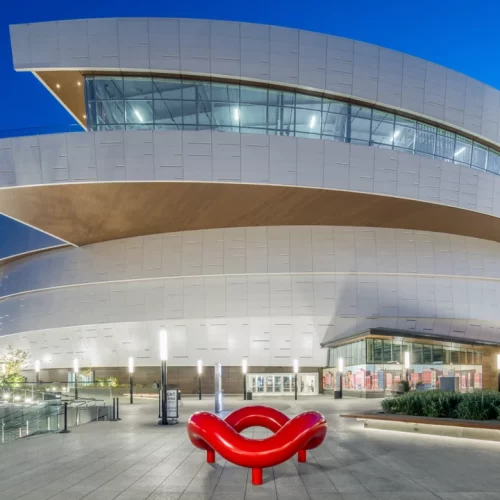
1. Material aesthetic
Once traditionally made from wood, modern soffits can take on a variety of appearances and materials. Our soffit woodgrains are what we call “solutions based” designs. These finishes allow designers to capture a specific tone or species of wood and the grain size and depth. We can also add layers of texture to the topcoat to offer depth and make the appearance exceptionally lifelike.
Chase Center – MANICA Architecture – Custom woodgrain
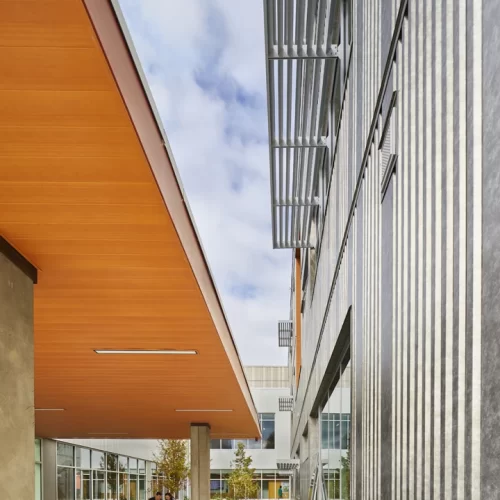
2. Durability and performance
Because a soffit is open to the elements, durability is a must. An AAMA 2605 rating ensures the material will resist UV degradation, corrosion, and chemical exposure. Pairing this with an FEVE resin ensure superior performance of the color and gloss level of the finish for optimal longevity. In terms of fire resistance, a standard ASTM E84 Class A Fire Rating ensures little to no flame or smoke development on the soffit.
Mount Si High School – NAC Architecture – Golden Butternut
3. Profile of the panels
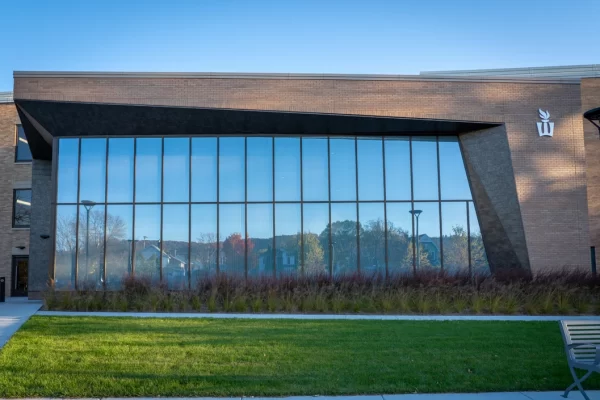
Soffit panels are typically flat, but there are options for soffits that allow designers to play with light. For this, a Scale™ system (bronze) offers uniformity in the panels, angled position of the panels allows light to reflect at various angles, while more relief in the reveals gives it the ability to create shadows. For a more traditionally flat appearance, a Planq™ system (woodgrain) will offer uniform, clean lines and a super flat surface.
(Left) Winona State University – Leo A Daly – Deco Bronze, (Right) Capitol Center – Tryba Architects – Riverside
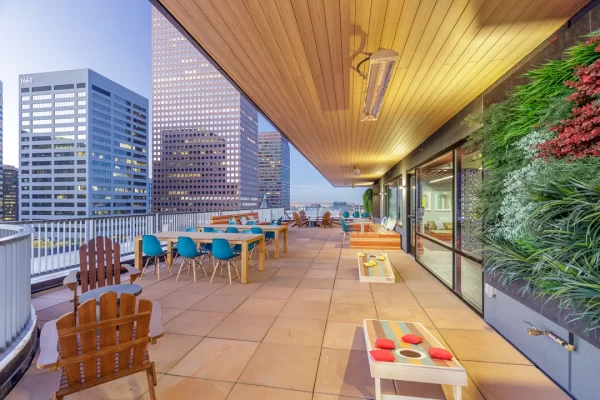
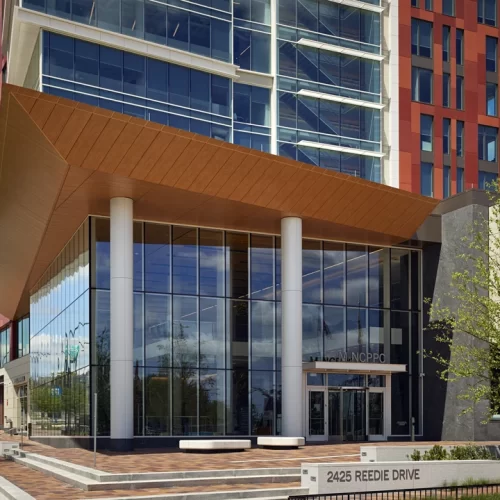
4. Does the material transition to the interior?
Finally, designers should determine if the soffit will stand alone or if it transitions to an interior ceiling. If the material transitions to the interior, are the panels needing to be acoustical or accessible? A flexible material that can be used in a variety of systems will ensure there is cohesion through the glazing. For optimal interior air quality, choose materials and finishes that are additionally VOC and Red List free.
Wheaton Town Center – Gensler – Custom woodgrain